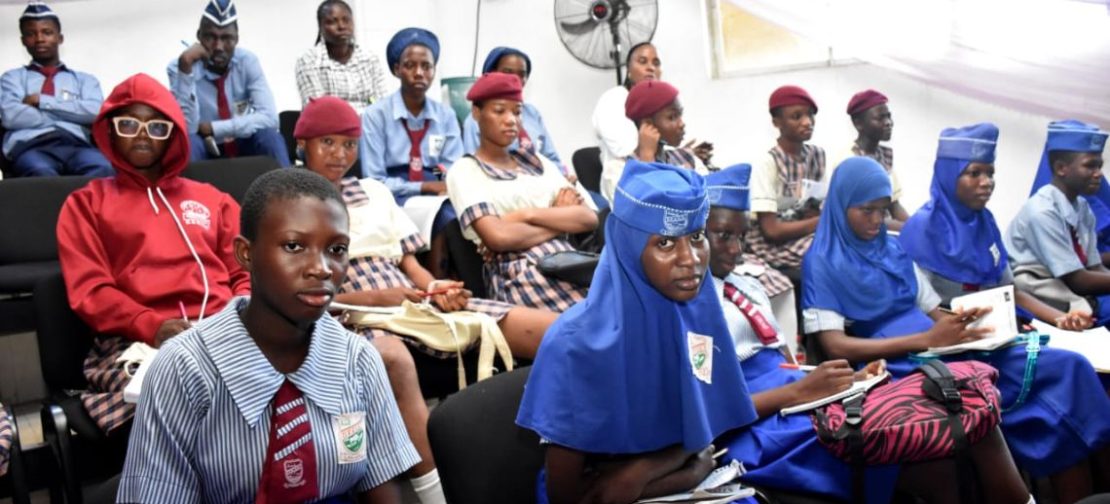
In the relentless pursuit of economic growth and material progress, Nigeria faces a quiet but profound erosion at its core: the decline of Moral & Civic Education. This is not merely a nostalgia for a bygone era of good behavior; it is a critical examination of the fraying social fabric that binds us. We see its symptoms everywhere—in the corruption that siphons public funds, in the toxic tribalism that fractures communities, in the blatant disregard for the common good, and in the crumbling sense of shared responsibility for our shared spaces and shared future. At the Rikolla Aid Foundation, we believe that the most urgent infrastructure Nigeria needs is not made of concrete and steel, but of character and conscience.
Our work in this arena is predicated on a simple, powerful truth: you cannot build a just, prosperous, and peaceful nation upon a foundation of ethical apathy. A nation is only as strong as the moral fibre of its citizens and the civic bonds that unite them. Our mission is to reignite the flame of civic virtue and moral courage, starting with the individual and rippling outward to transform our collective life.
The symptoms of this decline are not abstract; they are lived experiences with tangible costs.
The Corruption of the Common Good: When public service becomes a vehicle for private gain, when contracts are awarded based on connection rather than competence, and when the rules are seen as obstacles to be circumvented rather than guardrails for fairness, we witness a fundamental moral failure. This erodes trust in every institution, from government to the marketplace.
The Rise of Toxic Individualism: The glorification of success-at-any-cost, where the ends justify any means, has fostered a culture of ruthless self-interest. This “me-first” mentality suffocates empathy, discourages cooperation, and turns neighbors into competitors for scarce resources rather than allies in building a community.
The Erosion of Civic Duty & Patriotism: True patriotism is not just flag-waving; it is active, responsible citizenship. It is paying taxes, obeying traffic laws, voting with conscience, keeping one’s environment clean, and holding leaders accountable. When these duties are seen as burdens or options, the social contract breaks down, and the state’s ability to function for all is critically weakened.
The Intergenerational Knowledge Gap: The transmission of core values—respect, honesty, integrity, responsibility—from one generation to the next has been disrupted. This leaves many young people adrift, lacking a clear moral compass in a complex world, making them vulnerable to negative influences and cynical worldviews.
This collective moral drift is not just a social ill; it is a direct threat to our national security, economic potential, and public health. It creates the environment where corruption thrives, businesses flee, infrastructure decays, and communities fracture.
Our approach is restorative and proactive. We don’t just bemoan the decline; we provide the tools and frameworks for a moral and civic renaissance.
We integrate moral reasoning and civic principles into every program we run.
AWAM’s Framework for Ethical Leadership: Our women’s empowerment program teaches that true leadership is servant leadership. We discuss the ethics of business, the responsibility of success to uplift others, and the importance of integrity in all relationships, from the boardroom to the home.
Youth Training with a Moral Core: Our skills development for youth is inseparable from character development. We teach that a skilled coder must also be an ethical coder; a talented marketer must be a truthful one. We run workshops on ethical decision-making, financial honesty, and the civic responsibilities that come with being an educated citizen.
We demystify citizenship and make it actionable.
“Know Your Rights AND Your Responsibilities”: We move beyond abstract concepts. We explain, in practical terms, how local government works, how to engage with councilors, the importance of the PVC, and the tangible impact of community advocacy. We frame civic engagement not as politics, but as stewardship of one’s own community.
Modeling Civic Behavior: Our environmental initiatives are a live lesson in civic duty. A community clean-up drive is more than picking up litter; it is a collective act of taking responsibility for our shared space, demonstrating that public good requires personal action.
In a landscape poisoned by tribalism and toxic discourse, we foster spaces for respectful civic dialogue.
Teaching Constructive Disagreement: We facilitate conversations where differing views can be expressed without dehumanizing the other side. This builds the muscles of empathy and critical thinking, essential for a pluralistic democracy.
Promoting a Unifying Narrative: We actively counter divisive rhetoric by highlighting stories of cooperation, inter-ethnic collaboration, and the shared aspirations that unite all Nigerians—for safety, opportunity, and dignity.
Investing in moral and civic education yields the highest possible return: a functional, flourishing society.
The Trustworthy Citizen: An individual guided by integrity becomes a reliable employee, a trustworthy business partner, and an honest public servant. They build rather than extract.
The Cohesive Community: When neighbors see themselves as fellow citizens bound by mutual responsibility, they collaborate to solve local problems, support vulnerable members, and create safer, cleaner, more vibrant neighborhoods.
The Accountable Nation: A populace that understands its rights and duties is the strongest check on bad governance. It creates the demand for transparency, efficiency, and justice, paving the way for sustainable development and true national pride.
Your character is your legacy. Your engagement is your contribution. Nigeria will not be rebuilt solely by its engineers and economists, but by its citizens of conscience.
We call on parents to consciously impart values. We call on educators to see character formation as central to their mission. We call on leaders at every level to model the integrity they wish to see. We call on every Nigerian to move from being a passive resident to an active citizen.
Choose integrity over convenience. Choose responsibility over apathy. Choose community over division.
Let us commit, individually and collectively, to the hard, beautiful work of rebuilding the moral and civic foundations of our nation. The future we envision depends on the citizens we become today.
👑 Ready for AWAM 4.0? Get your questions answered instantly! Send us a "Hello" on WhatsApp for details on registration, speakers, and more.
